Embarking on the journey to establish a brand-new enterprise in the home and commercial services sector is one of the most resilient career moves an entrepreneur can make. The climate control sector represents a multi-billion-dollar marketplace that remains insulated from many macroeconomic downturns. Whether the broader economy is experiencing a boom or a correction, indoor climate control is no longer viewed as a luxury; it is an absolute necessity for health, safety, and basic human comfort. When a heating system fails in the dead of winter or a cooling unit breaks down during a record-breaking summer heatwave, property owners do not delay repairs. They immediately seek professional assistance, creating a baseline of non-negotiable demand that few other service industries can claim.
1. Navigating the Legal Landscape and Securing Your Credentials

Your very first step is obtaining the proper licensing to operate legally as an independent operator. This process typically requires proving several years of documented, hands-on field experience, passing a rigorous comprehensive exam covering local mechanical codes, and demonstrating a firm grasp of business law. Operating as a licensed HVAC contractor changes your relationship with the law; you are no longer just an employee covered by a corporate umbrella, but the entity legally responsible for structural modifications, electrical connections, and complex mechanical system designs.
Simultaneously, you must address federal environmental regulations. The Environmental Protection Agency mandates that any professional maintaining, servicing, repairing, or disposing of equipment that could release ozone-depleting refrigerants into the atmosphere must be certified under Section 608 of the Clean Air Act. You must ensure that you, and any future technicians you employ, hold Universal Certification to handle all types of equipment legally. Beyond licensing, you must register your business as a legal entity, such as a Limited Liability Company or an S-Corporation, to shield your personal assets from corporate liabilities. You must also secure comprehensive general liability insurance, property insurance, and workers’ compensation insurance to protect your capital from unforeseen accidents on the job site.
2. Crafting a Profitable Pricing Structure for Your Services
To build an accurate pricing model, you must first calculate your total cost of doing business. This includes fixed overhead costs like shop rent, software subscriptions, insurance, vehicle payments, and utilities, as well as variable costs like fuel, vehicle maintenance, and technician wages. Once you know your hourly overhead burden, you must establish a flat-rate pricing system for standard residential calls. Property owners despise surprises; giving them an upfront, flat fee for diagnostic work and subsequent fixes builds trust and protects your margins far better than an unpredictable time-and-materials model.
When structuring your service menu, ensure a strategic balance between fast-turn diagnostic calls and high-ticket capital improvements. For instance, seasonal maintenance inspections and system optimization tunings for residential air conditioning equipment provide incredible opportunities to build client relationships, gather baseline equipment data, and secure steady, predictable cash flow during shoulder seasons. These lower-barrier services naturally lead into major revenue events, such as a complete residential hvac installation for an aging, inefficient property. By pricing your installation labor and equipment markups accurately, a single system replacement can generate thousands of dollars in net profit, providing the vital capital reserves required to fund your ongoing business expansion.
3. Establishing a Strategic Wholesale Network
As a new business entity, you must immediately establish commercial accounts with major regional parts distributors and equipment manufacturers. Do not simply buy parts retail or rely on consumer-facing home improvement stores. You need access to dedicated wholesale pricing, bulk purchasing discounts, and priority equipment availability. Building strong credit lines with these distributors allows you to procure expensive equipment for large jobs without draining your immediate liquid cash reserves, keeping your working capital free for payroll and marketing.
When selecting your primary distribution partners, evaluate their inventory depth, delivery speeds, and warranty return policies. Your business relies heavily on the seamless availability of specialized hvac supplies ranging from universal motors, capacitors, and contactors to custom-fabricated sheet metal, copper piping, and eco-friendly refrigerants. You should design a standardized “truck stock” manifest for every vehicle in your fleet, ensuring that 90 percent of common failures can be resolved on the very first visit. By keeping these critical components organized in a clean, mobile inventory system within your vans, you maximize your first-time fix rate, delight your customers, and eliminate unprofitable supply runs.
4. Maximizing Revenue via Urgent Seasonal Care
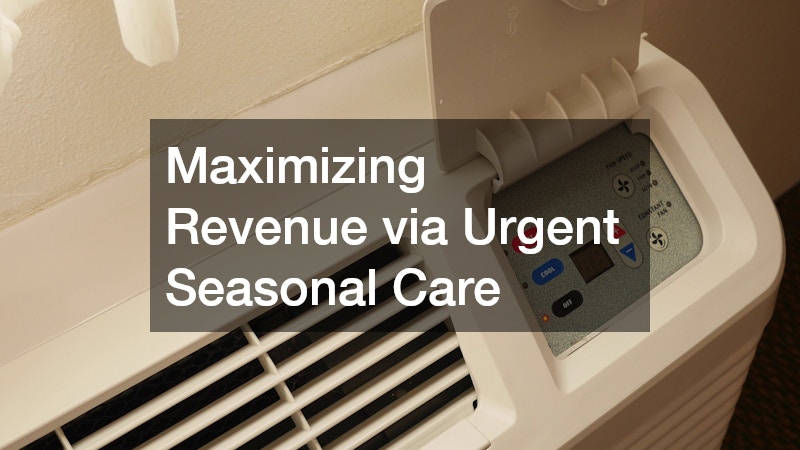
When summer temperatures climb, a broken cooling system rapidly escalates from an inconvenience to a dangerous residential emergency, particularly for families with young children or elderly relatives. Your operational framework must be optimized to respond to urgent requests for ac repair with extreme speed and professionalism. To handle this influx effectively without burning out your staff, implement a robust digital dispatching system that routes technicians based on real-time geographical proximity, minimizes drive times, and automates communication with waiting clients.
Similarly, winter presents an entirely different set of operational demands and revenue opportunities. When sub-zero temperatures hit, frozen pipes and failing heating systems can cause massive property damage. Your marketing and scheduling systems must seamlessly pivot to address emergency heating repairs for furnaces, boilers, and heat pumps. By positioning your business as the most responsive, reliable emergency service provider in your local market, you can command premium diagnostic fees and urgent-response rates. The key to long-term profitability is capturing these frantic, emergency clients during peak seasons and successfully converting them into lifetime maintenance agreement subscribers before the weather moderates.
5. Building Your Digital Brand and Outperforming the Competition
Your online foundation begins with a lightning-fast, mobile-responsive website that is carefully optimized for local search engine visibility. You must claim, verify, and meticulously optimize your Google Business Profile, ensuring your business name, physical address, and phone number are perfectly consistent across the entire internet. This local optimization allows your business to appear in the coveted map results when someone searches for a local HVAC company in their immediate neighborhood. To convert those searchers into paying clients, you must implement an automated system that aggressively requests authentic, five-star reviews from every single satisfied customer immediately after a job is completed.
Furthermore, you must actively study the digital footprints of other established ac companies operating within your territory. Analyze their website messaging, their social media engagement, and their online shortcomings. Many old-school trade businesses rely on outdated websites, fail to answer their phones promptly, or have poor online communication. You can easily outmaneuver these entrenched competitors by offering modern conveniences that consumers now expect, such as real-time online booking, text-message arrival notifications with technician photos, digital invoicing, and flexible, instant financing options right from the technician’s tablet at the job site.
6. Expanding Permanently into the Commercial Sector
While the residential service market offers fast cash flow and high volume, expanding your enterprise into the commercial sector introduces a level of financial stability and scale that can transform your business from a small local shop into a major regional powerhouse. Commercial properties operate on an entirely different scale than residential homes. The equipment is larger, the systems are far more complex, and the business-to-business relationships are driven by professional asset management rather than emotional domestic emergencies.
Entering the commercial marketplace requires your team to master complex systems such as large-scale rooftop package units, variable refrigerant flow systems, commercial chillers, and sophisticated automated building management systems. Property managers, facility directors, and retail business owners cannot afford system downtime; a failure in their climate control can result in lost inventory, closed retail spaces, and thousands of dollars in lost business revenue. Consequently, they are highly motivated to invest heavily in a professional commercial hvac service provider who can guarantee rapid response times and preventative care.
7. Creating a High-Performance Workplace Culture
To build a high-performance workforce, you must offer a compensation package that beats the local industry average. This includes competitive hourly wages or performance-based flat-rate pay, comprehensive health insurance, retirement matching programs, and paid time off. However, money alone will not retain the best talent. You must invest heavily in ongoing professional development and technical training. Providing your team with access to advanced manufacturer certifications, modern diagnostic equipment, and clear, structured pathways for internal career advancement shows them that your organization is a place where they can build a long-term career rather than just punch a time clock.
Additionally, you must equip your field staff with late-model, safe, and impeccably organized service vans that contain top-tier diagnostic tools and modern mobile technology. When a technician feels supported by leadership, has the tools they need to succeed, and works within an empowering, positive corporate culture, their job satisfaction skyrockets. This internal cultural health directly impacts your bottom line. Happy, fulfilled employees take pride in their craftsmanship, reduce costly call-backs or installation errors, and naturally deliver the world-class customer service that will make your HVAC company the most respected and highly recommended brand in your community.
8. Financial Management and Managing Your Working Capital
Managing the financial pulse of a growing service enterprise requires meticulous attention to detail and absolute discipline. Many business owners mistake high revenue for financial health. It is entirely possible to generate millions of dollars in top-line sales while bleeding cash internally due to unoptimized overhead, slow collections, and poor inventory management. To ensure long-term profitability, you must establish rigorous accounting practices from day one.
You must implement a modern, cloud-based field service management software that integrates seamlessly with your accounting platform. This setup allows you to track profitability on a per-job basis, giving you real-time visibility into your exact material costs and labor burdens. Pay incredibly close attention to your accounts receivable. In the residential sector, you should enforce a strict policy of collecting payment immediately upon completion of service via mobile credit card readers. In the commercial sector, where 30-day or 60-day invoicing terms are common, you must implement an aggressive collection protocol to prevent your cash from getting trapped in unpaid invoices, which can rapidly jeopardize your ability to meet weekly payroll.
9. Implementing World-Class Customer Experience Workflows
In a service-driven industry, your true product is not the mechanical equipment you install or the components you replace; it is the emotional experience of comfort, safety, and peace of mind you deliver to the customer. The technical execution of the work is simply the baseline expectation. To build a wildly successful, highly profitable brand that enjoys massive customer retention and endless word-of-mouth referrals, you must engineer a flawless customer experience workflow that delights people at every single touchpoint.
The customer journey begins the moment they interact with your brand online or call your office. Your customer service representatives must be trained to answer the phone within three rings with an energetic, empathetic, and highly professional script. Avoid automated phone trees during business hours; customers experiencing a home emergency want to speak to a helpful human being immediately. Once a service call is scheduled, send automated text and email confirmations with a brief bio and photo of the assigned technician. This simple step alleviates the anxiety many homeowners feel about letting a stranger into their private residence.
10. Planning for Long-Term Business Scaling and Autonomy

The ultimate goal of a true entrepreneur is to transition from an owner-operator who works inside the business to a strategic chairman who works on the business. If the daily operations of your company grind to a complete halt the moment you take a vacation or step away from your desk, you do not own a true business; you simply own a highly stressful job. To achieve genuine wealth and personal freedom, you must intentionally design your enterprise to operate independently of your personal day-to-day labor.
Achieving this level of operational autonomy requires the comprehensive documentation of every single business process within your organization. You must create a centralized repository of Standard Operating Procedures (SOPs) that outlines exactly how every task is executed, from answering phone calls and processing invoices to staging installation trucks and executing seasonal equipment maintenance. These clear, written playbooks remove ambiguity and allow you to systematically delegate responsibilities to your staff, ensuring absolute consistency of service quality as your fleet grows.
Remember that the ultimate differentiator in the home and commercial services sector is an uncompromising commitment to operational excellence and human integrity. Equipment and technologies will inevitably evolve, but the fundamental human need for honest, reliable, and expert service will never change. As you step out to launch your brand, focus on building deep, trust-based relationships with your clients, your vendors, and your employees. With relentless dedication, careful financial management, and a clear strategic vision, your new venture will rapidly grow from an ambitious startup into a dominant, highly profitable regional powerhouse that provides security for your team and true financial freedom for yourself.